Salt Air and Terroir: What Cocoa Beach's Coastal Ecosystem Can Teach You About Wine
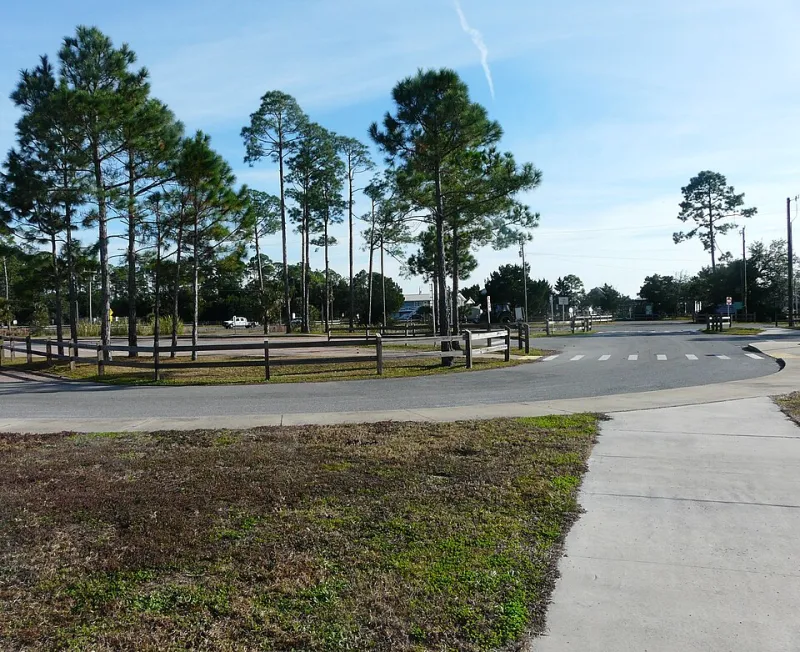
Photo: The Bushranger, CC BY-SA 4.0, via Wikimedia Commons
Stand at the water's edge in Cocoa Beach long enough and you'll notice something. The air changes. There's a mineral sharpness to it — that particular combination of salt, seaweed, and warm Atlantic wind that hits differently depending on the tide. It's subtle, layered, and almost impossible to describe without reaching for a metaphor.
Which, it turns out, is exactly how a lot of people talk about wine.
For a growing number of sommeliers, chefs, and beverage directors working along the Space Coast, that parallel isn't just poetic — it's genuinely useful. The same sensory vocabulary we use to describe a coastal ecosystem, the salinity, the minerality, the way one element bleeds into another, maps surprisingly well onto how we talk about what's in the glass. And in a place like Cocoa Beach, where the natural world is never more than a few blocks away, it's becoming a real framework for building wine programs and guiding guests through pairings.
Reading the Tide Like a Label
If you've ever spent time around the Indian River Lagoon or wandered the stretch of shoreline near Lori Wilson Park, you already know that Cocoa Beach's ecosystem isn't one-note. The lagoon alone supports more species of fish than nearly any other estuary in North America. Sea grasses, oyster beds, fiddler crabs, manatees — the biodiversity here is genuinely staggering, and it shifts depending on the season, the salinity levels, and the tidal cycle.
Local beverage professionals have started leaning into that complexity as a teaching tool. Rather than opening with a lecture on grape varieties or appellations, some are starting conversations with a simpler question: what does this place smell like right now?
"Once someone connects to the environment they're physically sitting in, wine stops being abstract," says one Space Coast sommelier who leads informal tasting experiences at a beachside dining spot. "I'll point to the salt air coming off the water and say — that's what Chablis is chasing. That's what coastal Galicia tastes like in a bottle of Albariño. Suddenly the wine makes sense because the place makes sense."
It's a disarmingly simple approach, but it works. Terroir — the French concept that a wine carries the character of its origin, its soil, its climate, its geography — is notoriously hard to explain to someone who's never thought about it. But tie it to a lived experience, to the actual smell of low tide or the way sea spray coats your lips, and it clicks fast.
Native Flora as a Flavor Map
Cocoa Beach's plant life doesn't get nearly enough credit. Sea oats sway along the dune lines. Saw palmetto clusters inland. Mangroves frame the lagoon edges in twisted, salt-tolerant networks that support enormous amounts of wildlife. None of it looks like a vineyard, but the aromatic profiles these plants carry have more overlap with certain wine regions than you might expect.
Chefs working with locally sourced ingredients are starting to make those connections explicit in how they build their menus — and by extension, how they approach wine pairings.
One chef at a Space Coast restaurant known for its seafood-forward menu described her process this way: "I think about what's growing here, what's in the water, what the air smells like on a given day. Then I try to find wines that either mirror that or contrast it in an interesting way. A grilled local flounder with a saw palmetto honey glaze? That's asking for something with a bit of resinous herbal character — maybe a white Rhône, maybe a Vermentino from Sardinia. The wine should feel like it grew up near water too."
That instinct — matching wines to environments rather than just to dishes — is gaining traction in a way that feels organic to the Space Coast's culture. It's less about rules and more about resonance.
The Mineral Thread
If there's one flavor concept that ties Cocoa Beach's ecosystem to wine more than any other, it's minerality. That contested, endlessly debated tasting note that wine writers love and scientists argue about actually has a pretty intuitive entry point here: the beach.
The mineral quality in certain wines — the flinty snap of a Loire Valley Sancerre, the chalky backbone of a good Champagne, the wet-stone character in a German Riesling — registers the same way that standing on a wet sandbar does. It's not sweet. It's not fruity. It's something older and more elemental.
Local wine educators have found that starting with that sensory anchor makes the concept far less intimidating. "People get it immediately when they're sitting outside and the breeze is coming in off the ocean," notes one educator who runs informal wine sessions at a beachside venue. "I don't have to explain minerality philosophically. I just say — taste this, now smell the air. There it is."
The approach also helps guests understand why certain wine and food combinations feel right in a coastal setting in a way they might not inland. A highly acidic, mineral-driven white wine alongside fresh oysters or steamed clams isn't just a classic pairing because of some textbook rule. It's a pairing that makes ecological sense — the wine and the food are both products of similar environments, and that shared DNA shows up on the palate.
Letting the Lagoon Lead
What's most interesting about this emerging philosophy along the Space Coast isn't just that it's pedagogically clever — it's that it's producing wine programs with a genuine sense of place. When a sommelier or beverage director is actively drawing inspiration from the local ecosystem, the selections they make tend to feel cohesive in a way that a generic wine list doesn't.
You start to see more coastal European varieties — Albariño, Vermentino, Muscadet, Assyrtiko from Santorini's volcanic soils — sitting alongside the expected California Chardonnays and Napa Cabs. You start to see intentional choices about texture and weight that reflect the lightness and brightness of the food coming out of the kitchen. You start to see a list that, even without a lot of explanation, feels right for where you are.
And in a place like Cocoa Beach, where diners are often eating within earshot of the Atlantic, that matters. The environment is part of the meal whether anyone acknowledges it or not. The smartest wine programs here are simply choosing to work with it.
The tide comes in, the tide goes out, and somewhere in between, someone's pouring a glass that tastes exactly like where you're sitting. That's not an accident — that's a philosophy. And on the Space Coast, it's quietly becoming the most compelling way to think about wine.